
Resilient cloud infrastructure and
automated release engineering.
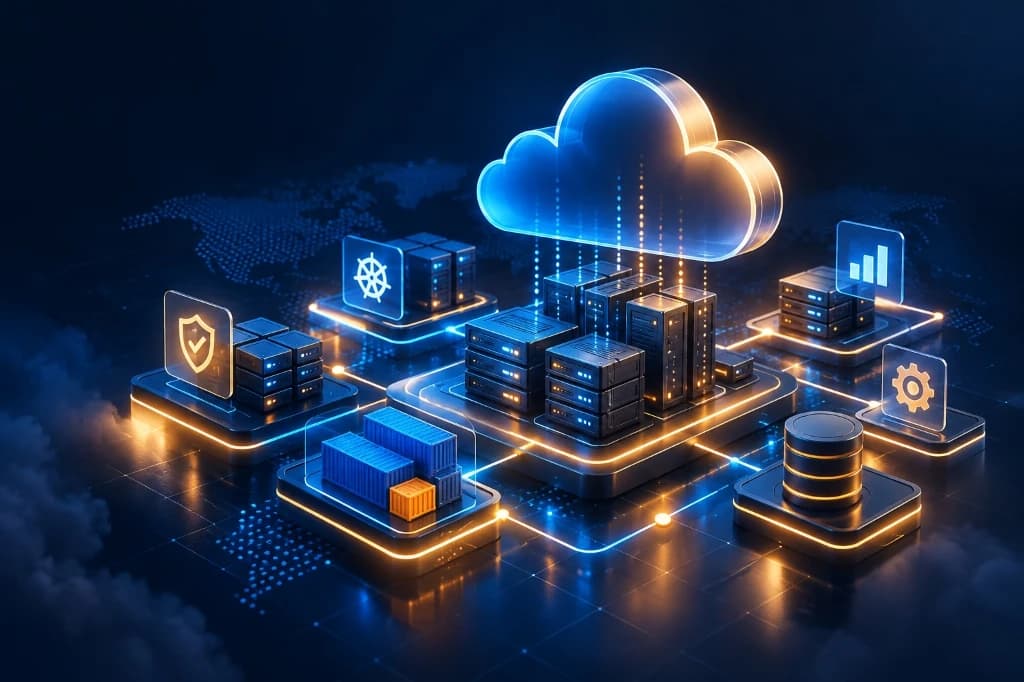
We architect multi-cloud infrastructure on AWS, Google Cloud, and Azure using declarative Terraform, Docker containerization, Kubernetes orchestration, zero-downtime CI/CD pipelines, and proactive 24/7 Datadog monitoring.
Built for high reliability, automated rollbacks, and zero deployment downtime.
From code to production
See how automated checks, builds and releases work together in a deployment pipeline.
Illustrative simulation. This is not a live deployment system.
Why automated cloud engineering matters
Compare standard manual deployment bottlenecks with Krishridhi automated DevOps infrastructure.
| Evaluation Dimension | Manual Deployments Legacy ad-hoc scripts & SSH | Krishridhi Automated DevOps Version-controlled CI/CD & IaC |
|---|---|---|
| Deployment Duration | 2 to 4 hours of manual coordination SSH access, manual script execution, manual database schema migration, and high downtime windows. | Under 5 minutes fully automated40x faster cycle time Triggered automatically on verified Git merge with deterministic, repeatable steps. |
| Release Risk & Rollbacks | Stressful, ad-hoc rollbacks Reverting manual server changes under pressure during production incidents often leads to cascade failures. | One-click automated instant rollbackSub-second recovery Previous container image and Kubernetes deployment state restored in seconds with zero data loss. |
| Configuration Drift | Untracked server-side changes Ad-hoc tweaks made directly on live machines leave environments out of sync and undocumented. | 100% Version-Controlled IaCZero environment drift Every server, subnet, security group, and cluster defined in Terraform repositories with audit history. |
| Incident Visibility | Reactive after customer complaints Teams discover outages only after end users notice failed checkouts or broken pages. | Proactive 24/7 Datadog alertsSub-minute alerting Automated telemetry monitors error rates, p99 latency spikes, and server load before users are affected. |
| Human Error Rate | Vulnerable to manual typos & missed steps Checklists executed by hand invariably miss environment variables or permissions under deadlines. | Deterministic CI/CD enforcementZero human execution error Automated test gates reject faulty builds before they ever reach production infrastructure. |
2 to 4 hours of manual coordination
SSH access, manual script execution, manual database schema migration, and high downtime windows.
Under 5 minutes fully automated
Triggered automatically on verified Git merge with deterministic, repeatable steps.
Stressful, ad-hoc rollbacks
Reverting manual server changes under pressure during production incidents often leads to cascade failures.
One-click automated instant rollback
Previous container image and Kubernetes deployment state restored in seconds with zero data loss.
Untracked server-side changes
Ad-hoc tweaks made directly on live machines leave environments out of sync and undocumented.
100% Version-Controlled IaC
Every server, subnet, security group, and cluster defined in Terraform repositories with audit history.
Reactive after customer complaints
Teams discover outages only after end users notice failed checkouts or broken pages.
Proactive 24/7 Datadog alerts
Automated telemetry monitors error rates, p99 latency spikes, and server load before users are affected.
Vulnerable to manual typos & missed steps
Checklists executed by hand invariably miss environment variables or permissions under deadlines.
Deterministic CI/CD enforcement
Automated test gates reject faulty builds before they ever reach production infrastructure.
Nested-zone cloud environment architecture
A defense-in-depth layout isolating edge routing, private compute nodes, persistence tiers, and observability.
Zone 1: Global Edge & Ingress
Isolation: Public Facing • DDoS Shielded
DDoS protection, DNS routing, SSL/TLS termination, and edge caching before reaching internal infrastructure.
Private subnets across multiple availability zones, isolated by security groups and NAT gateways.
Containerized workloads running in auto-scaling Kubernetes clusters with health checks and rolling updates.
Encrypted-at-rest relational databases and cache layers in private database subnets with automated snapshots.
Centralized telemetry collecting metrics, distributed tracing, container logs, and synthetic monitors.
Enforced with version-controlled Terraform modules, least-privilege IAM policies, and automated health checks.
Core cloud engineering capabilities
Engineered with modern cloud standards, version control, and production reliability.
Infrastructure as Code (IaC)
Modular, version-controlled repository defining all cloud resources.
Kubernetes & Container Orchestration
Hardened Kubernetes cluster with staging and production isolation.
CI/CD Pipeline Automation
Deterministic automated deployment pipeline on every Git merge.
Multi-Cloud Architecture
Cross-cloud deployment architecture with automated failover provisions.
Observability & APM Telemetry
Pre-configured dashboards with error, latency, and resource alert rules.
Cloud Security & Secrets Governance
Security audit report and automated pipeline security scanning gates.
The five-layer delivery stack
How we plan, provision, containerize, automate, and hand over production cloud environments.
Workload Audit & Cloud Blueprint
We analyze your architecture, traffic patterns, and dependencies to design a clean multi-cloud blueprint.
Documented, reviewable cloud architecture blueprint
Questions about our Cloud & DevOps service
Transparent answers on cloud providers, release safety, cost optimization, and migration.
Build reliable, automated cloud infrastructure.
Talk directly with our senior cloud engineers about automating deployments, migrating to containers, or optimizing multi-cloud performance.
Direct consultation with senior cloud engineers. Clear recommendations and transparent pricing.